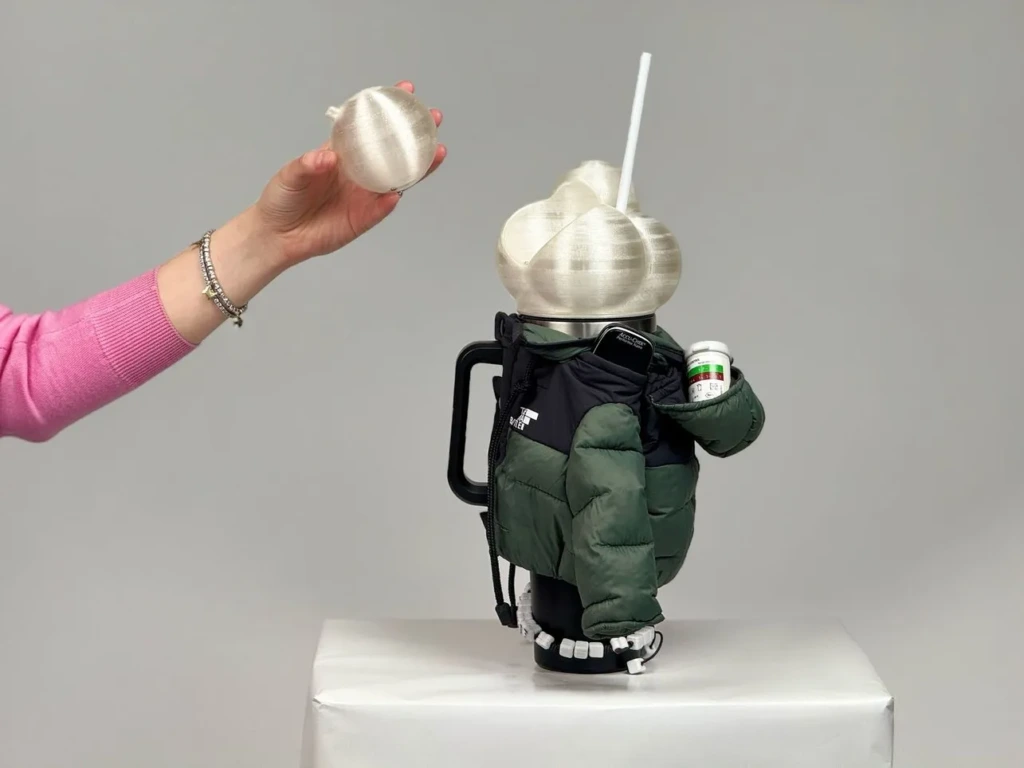
A team from the Kaunas University of Technology (KTU) Design Centre has transformed young people’s ideas into a prototype designed to make everyday life with Type 1 diabetes easier. The Dia Bottle combines a water bottle, a compartment for a liquid glucose drink and storage for essential diabetes-management supplies, Kaunas Full of Culture reports.
Created during an international hackathon at the Herojus School in Kaunas, the concept was developed with children and teenagers living with Type 1 diabetes, their families, designers and health specialists. KTU postgraduate design student Justina Klėjūtė was among the creators who turned a child’s initial sketch into a functional product prototype.
For young people with Type 1 diabetes, managing the condition can involve difficult practical and emotional moments, especially at school. The project aims to reduce discomfort around carrying medical supplies and encourage more open conversations among peers.
“One of the goals was to create an object that young people would genuinely want to carry,” says Klėjūtė. Consultations with children and their families highlighted that a bottle could offer not only a practical reminder to drink enough water, but also a sense of reassurance during anxious moments.
The project’s participatory-design approach was particularly important. Children and families contributed their experiences and ideas, ensuring that the result responded to real needs rather than assumptions about them. When the prototype was presented to children in Kaunas, they said they would use it themselves.
A Practical Response to Daily Needs
Assoc. Prof. Dr Auksė Domeikienė, Head of the Department of Preventive Medicine at the Lithuanian University of Health Sciences, notes that thirst is an important symptom and consideration in Type 1 diabetes management. A convenient, visible bottle can help young people maintain regular fluid intake while keeping emergency supplies close at hand.
The Dia Bottle was also presented at a design event in Copenhagen, where it received positive feedback from the design community. For its creators, however, the most meaningful response came from the young people whose ideas inspired it.
The project demonstrates how inclusive design can address more than functional needs: it can help people feel recognised, supported and more confident in their everyday lives.