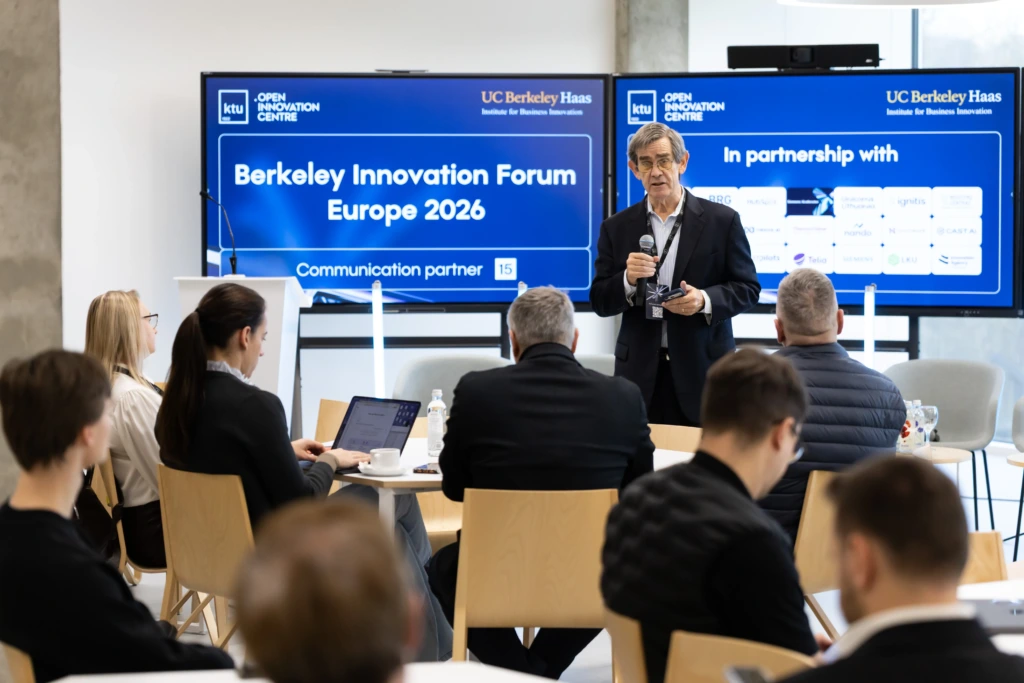
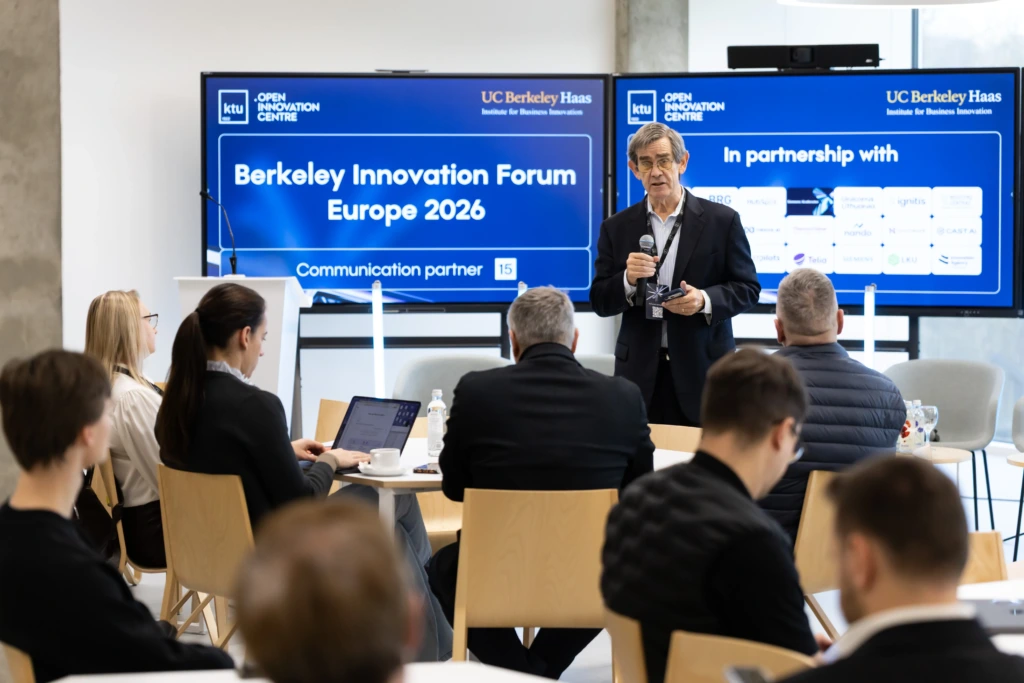
Previously held exclusively in the United States, this year, the international Berkeley Innovation Forum took place in Europe for the first time, with Lithuania chosen as its host country. Held at Kaunas University of Technology (KTU), the two-day event brought together representatives of global technology companies, researchers from the University of California, Berkeley, and other innovation experts. Discussions explored why even the largest companies should collaborate with their competitors, how artificial intelligence (AI) is transforming business, and which human skills will remain essential in the future.
Alongside expert presentations, the programme featured practical workshops and business challenge sessions, where Lithuanian organisations presented real-world challenges. Participants worked together to explore potential solutions and discuss opportunities for collaboration.
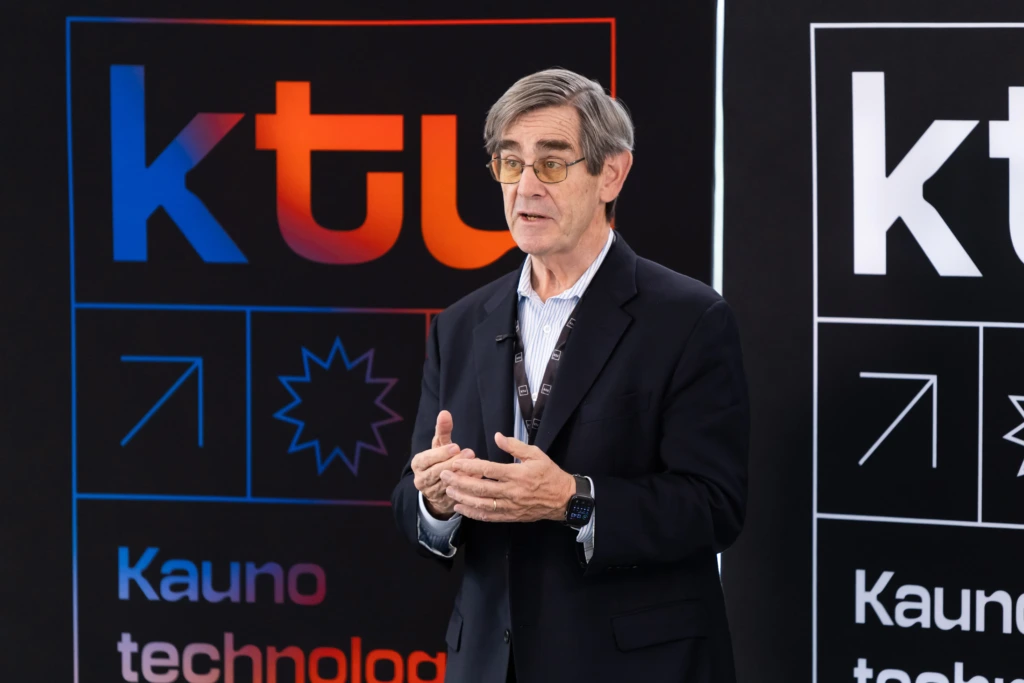
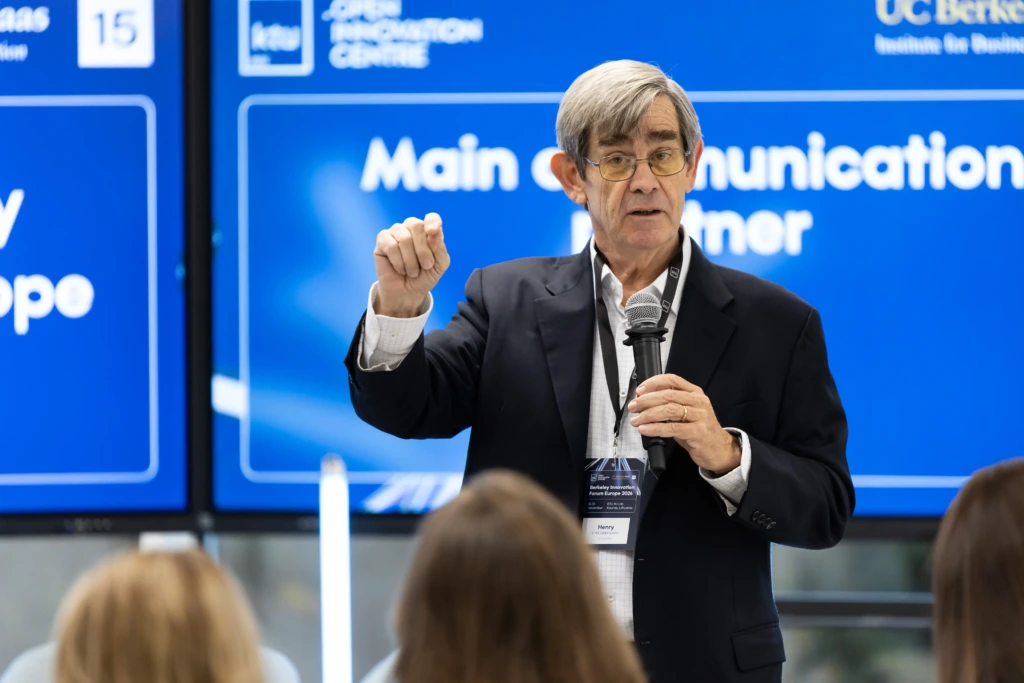
“I’m learning quite a bit about industry here in Lithuania, such as the success in fintech, where a number of new start-ups have helped to energise the financial sector – something I did not know until I came here,” says Chesbrough.
Bringing Silicon Valley’s Collaboration Model to Lithuania
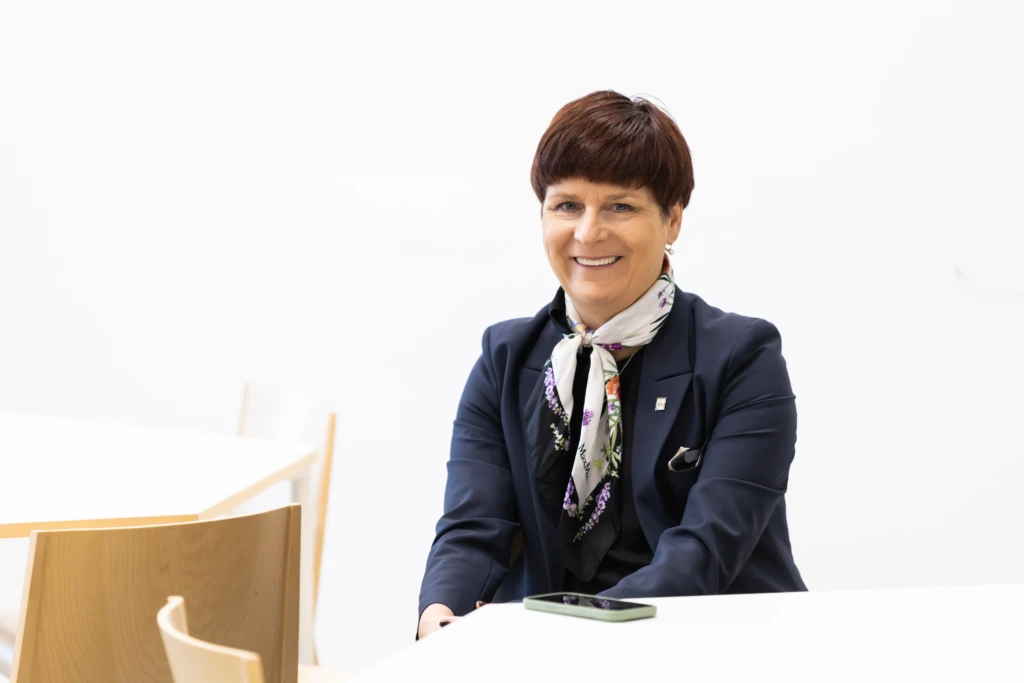
According to Professor Edita Gimžauskienė, KTU Vice-Rector for Strategic Partnerships, the forum marks an important step towards strengthening the university’s role in the innovation ecosystem. Working with the University of California, Berkeley, KTU has brought Silicon Valley’s collaboration model to Europe and adapted it to the European context, bringing together international representatives of academia, technology and business.
“Our aim is not only to strengthen ties between universities and businesses, but also to change the way they collaborate.
Chesbrough also addressed why collaboration is not always easy to put into practice. He recalled that when he introduced the concept of open innovation in 2003, his main focus was on how companies could share knowledge and collaborate with one another. However, his perspective has changed over the past two decades.
“After more than 20 years, some of the hardest parts of making open innovation work are inside rather than outside,” says Chesbrough.
While some departments within a company may be eager to explore new ways of collaborating, others, accustomed to established processes, may resist change. This is particularly relevant for large companies, which often need to adapt their existing ways of working to collaborate with new partners.
Even Competitors Can Become Partners
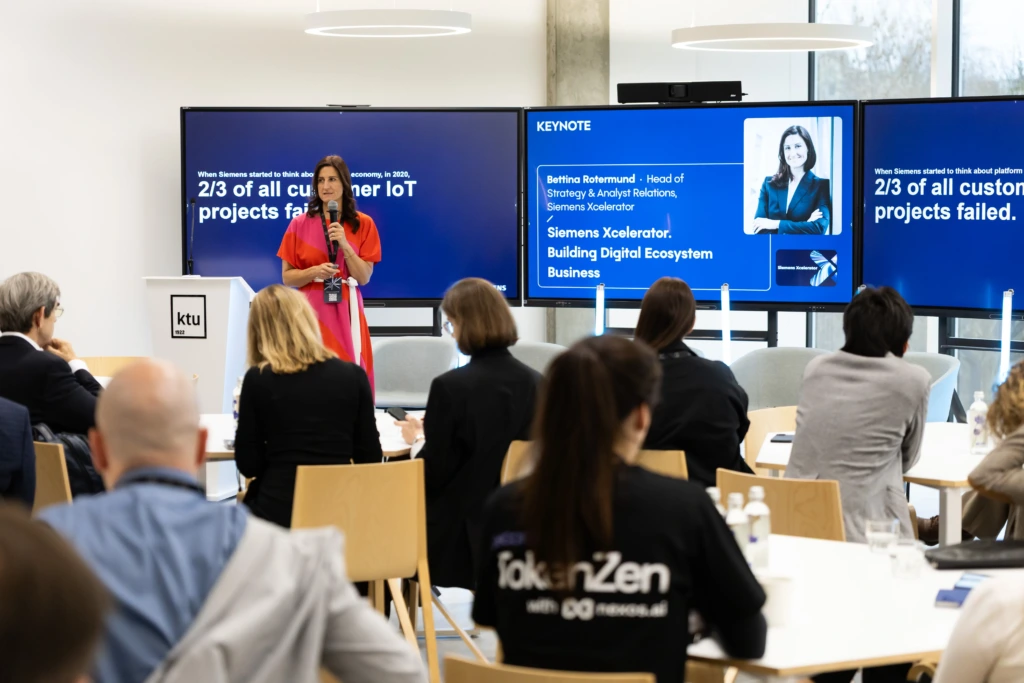
Bettina Rotermund, Head of Strategy and Analyst Relations at Siemens Xcelerator, explored a similar issue during her presentation. She explained that Siemens had long offered customers a wide range of technological solutions, but left them to work out how to integrate and adapt these technologies to their specific needs. What seemed straightforward to the company’s engineers was often difficult for customers to navigate.
This prompted Siemens to rethink its approach and develop Siemens Xcelerator, a platform where customers can find not only technologies but also partners who can help them put those technologies into practice.
One of the most difficult decisions was to include competitors’ products on the platform. Although the move initially met with internal resistance, it allowed the company to shift its focus away from selling individual products towards finding the most suitable solutions for customers.
Rotermund emphasised that a technological platform alone does not guarantee successful collaboration. Real value emerges when different organisations share knowledge, build trust and work together to solve problems that no single company has the expertise to address alone.
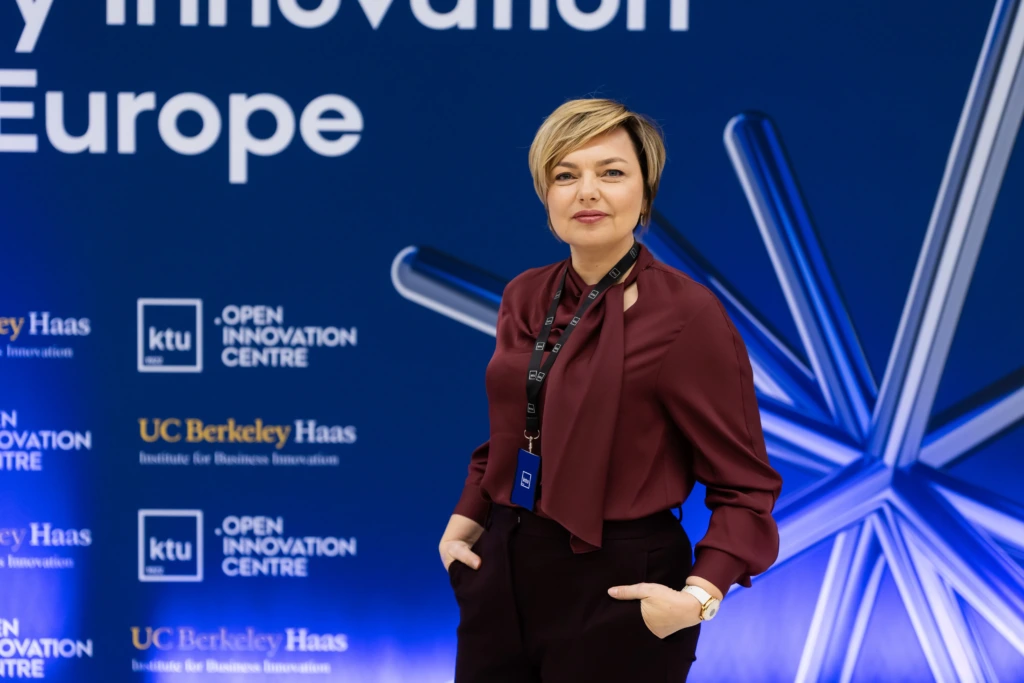
“Lithuania’s competitive advantage may lie not in its ability to develop every necessary technology independently, but in its ability to bring together existing knowledge, technologies, talent and capital from around the world faster than others,” says Pundzienė.
Forum participants also had the opportunity to put this approach into practice. During the business challenge sessions, representatives of Lithuania’s Innovation Agency and the Lithuanian Central Credit Union presented challenges facing their organisations. Meanwhile, workshops led by the international innovation platform Plug and Play explored opportunities for collaboration with start-ups.
A Vision for Digital Twins
A university where students are taught not by lecturers, but by their digital twins – this was the vision of the future presented at the forum by David Teece, Professor at the University of California, Berkeley.
Teece is currently developing his own digital twin, an AI model built on his accumulated knowledge and designed to replicate his way of thinking.
Such models, he suggests, could eventually serve as personal mentors, helping people learn, explore complex questions and identify connections between different disciplines. However, this does not mean that AI will be able to replace humans entirely.
Teece believes that technology will primarily take over routine, clearly defined tasks. For example, it could significantly speed up contract drafting or market analysis.
Chetna Mahajan, Head of Corporate Engineering at software company HubSpot, also discussed how AI is already changing the day-to-day operations of businesses.
Many organisations now have access to similar AI tools, Mahajan explained, meaning that competitive advantage no longer comes simply from using the technology, but from how effectively companies integrate it into their operations.
She also highlighted how the questions business leaders ask about AI are changing. Initially, their main concern was whether employees were using AI at all. Attention then shifted to which business processes the technology could transform. Now, organisations are increasingly focusing on how AI is reshaping their business models, changing the competitive landscape and creating new opportunities.
Reflecting on the outcomes of Berkeley Innovation Forum Europe, Pundzienė emphasises that the event provided a valuable opportunity to establish new connections between Lithuanian and international companies, academics and innovation experts.
The next priority, she says, is to turn these connections into long-term partnerships, launch joint projects and generate tangible value for both Lithuania’s innovation ecosystem and the wider international community.