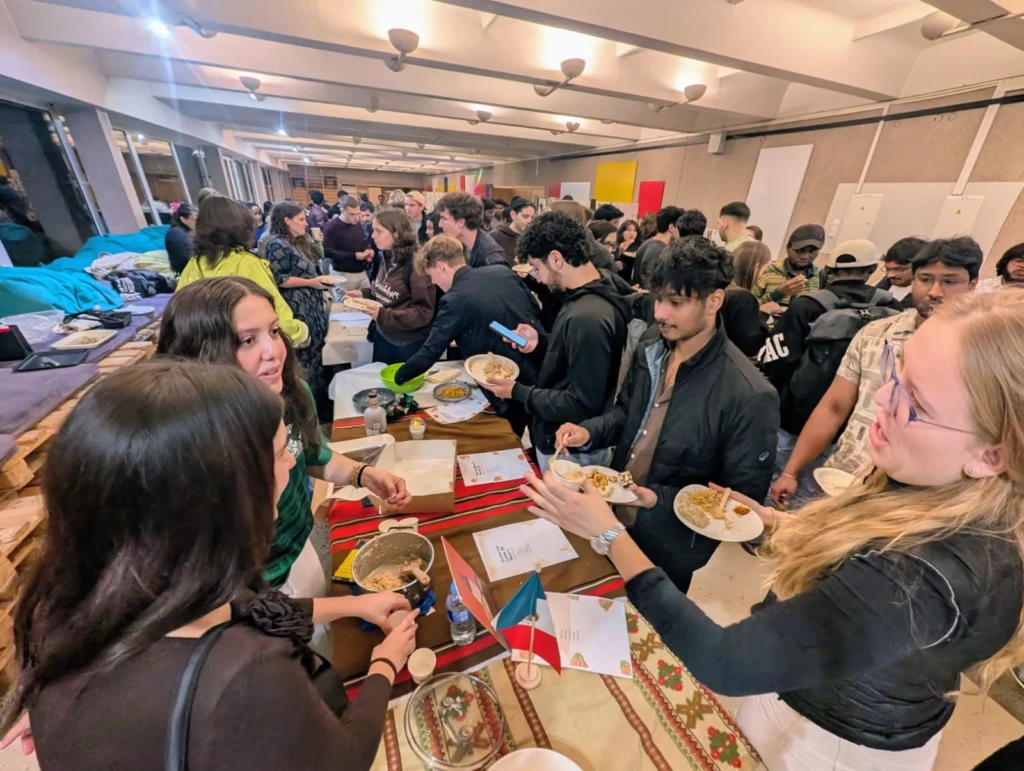
More than 130 participants and over 15 student chefs came together at Kaunas University of Technology (KTU) on 23 October for the International Dinner, sharing dishes from their home countries and getting to know the University’s international community.
Held on the KTU Student Campus, the event combined food tasting with opportunities to meet fellow students and learn more about life in Kaunas. For Sofiia Gliuza, a Study@KTU Ambassador and one of the organisers, its importance goes beyond trying new dishes.
“I think that International Dinner is one of the most important events for bringing our community together,” says Gliuza.
She describes KTU as a place where students from different cultural backgrounds can feel safe sharing their stories and traditions, with the dinner offering an opportunity to do just that.
The evening began with an interactive quiz about KTU and Kaunas, followed by practical information about university and city life. Study@KTU Ambassadors and representatives of the KTU Student Union introduced student organisations and shared updates to help newcomers settle in.
After tasting the dishes, participants voted for their favourites, with the Indian, Mexican and Nigerian teams receiving the most votes.
For Isioma Egboh, who prepared Nigerian food, cooking is closely connected to community and a sense of belonging. She chose to share egusi soup, a dish she associates with the creativity and resilience of Nigerian culture.
“I’m proud of how Nigerian culture blends community, creativity and resilience,” says Egboh.
She explains that the soup has many regional variations and brings people together through preparing and sharing food. For her, it is also a reminder of home.
Living in Kaunas has given Egboh an opportunity to discover Lithuanian culture. She particularly appreciates the respect for personal space, the connection with nature and the pride people take in their traditions. Adapting to local life has also helped her become more mindful and organised.
For Angela Duarte and Miguel Duarte, who presented Mexican food, the dinner was an opportunity to introduce the history behind their dish. They explain that the bread they served has roots in a pre-Hispanic Mexican dessert made with amaranth and honey and shaped into figures or skulls.
“We feel proud about the huge diversity of cultural expressions and their constant transformation among regions, contexts, and time,” they say.
The pair have also enjoyed discovering how culture is expressed in Kaunas. Walking through the city, they notice different periods of its history reflected in the architecture, while sculptures and murals turn its streets into an open-air gallery.
They see the city’s parks as another part of this experience: places to meet friends, spend time outdoors and watch the seasons change. For the students sharing their food at the International Dinner, getting to know a new culture goes hand in hand with finding ways to share their own.