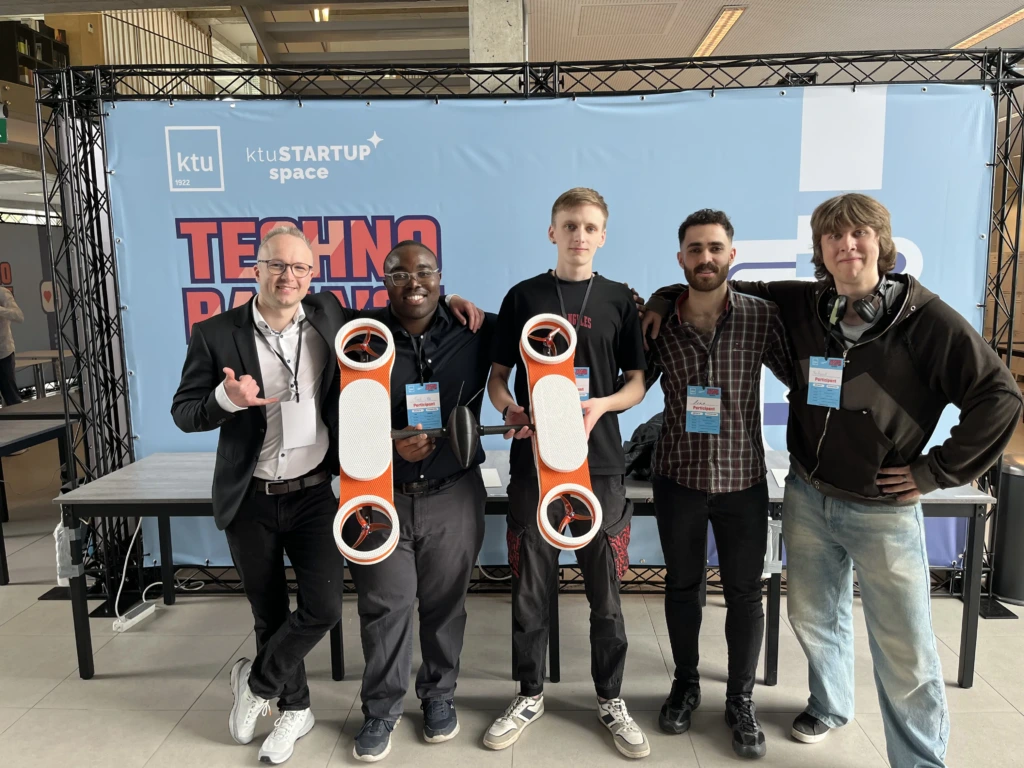
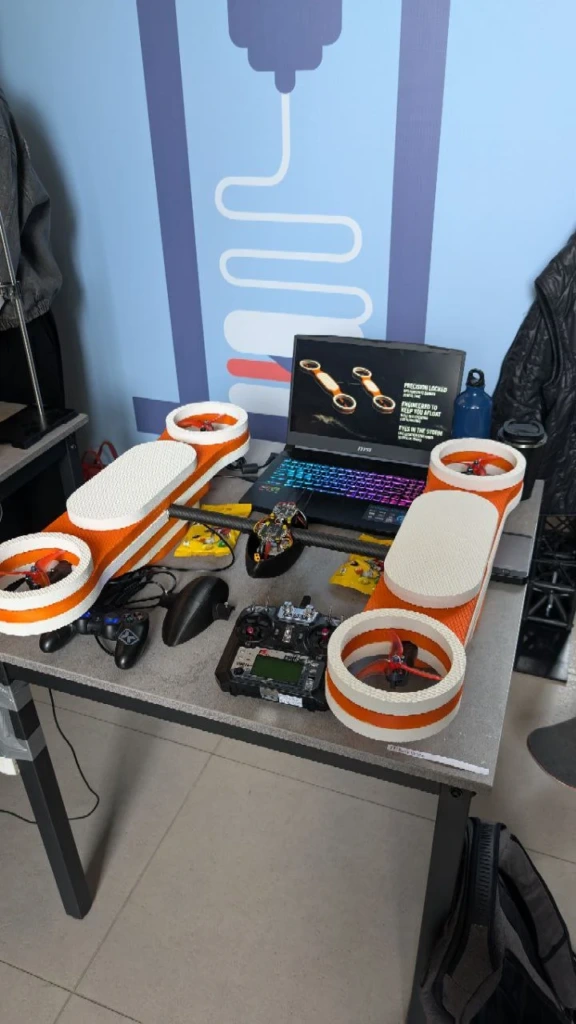
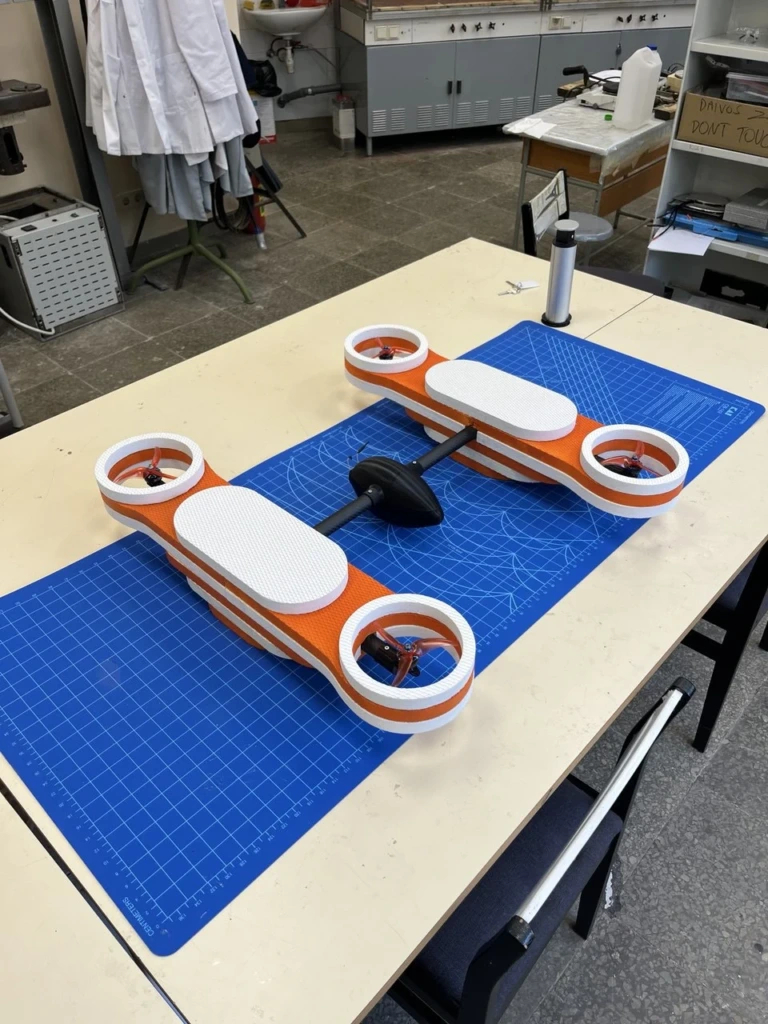
A drone that moves across water, detects a struggling swimmer, and reaches them before help arrives may sound like something from the future. However, for a group of international students at Kaunas University of Technology (KTU), this became a very real project. The Buoy Drone, developed by Armin, Vladyslav, Yevhenii and Tadiwanashe, is not just a prototype, but a response to a problem they could not ignore. “Our goal is to help lifeguards save the lives of people in danger of drowning,” Tadiwanashe explains.
Drowning Remains a Serious Issue in Lithuania
The idea for the Buoy Drone did not come from a single breakthrough moment. It started with research and a growing awareness of a serious issue. In recent years, Lithuania has recorded one of the highest drowning rates in Europe. “We were deeply saddened to discover the number of lives lost to drowning in Lithuania,” says Tadiwanashe Mkonto.
Talking to lifeguards helped them understand what is happening behind the statistics. The team spoke with the head of lifeguards in Klaipėda and other regions, who shared the real challenges they face daily. These include unpredictable weather conditions, delayed response times, and situations where people ignore safety warnings. “For us, even one life lost is one too many,” says Tadiwanashe.
From there, the goal became clear – to create something that could react immediately and support rescuers when time is critical.
The system is semi-automated. “It can patrol coastlines or lakes, detect a person in distress, and immediately alert lifeguards,” Vladyslav Dmytrenko explains. At the same time, it moves across the water towards the individual, allowing them to hold on and stay afloat until help arrives. “Ultimately, it is about reducing response time and supporting lifeguards in critical moments where every second counts,” he adds.
Winning Was Just the Beginning
Presenting the Buoy Drone at Technorama was a chance to see how the idea works outside the classroom environment. It was not just about presenting, but also about getting feedback from people who understand both the technical and practical side of innovation.
“Technorama gave us a chance to test our idea in a real setting and see its actual potential,” Armin explains. That experience led to a moment the team still finds hard to describe.
“It was honestly hard to put into words… That moment felt unreal,” he says about winning the Rector’s Grand Prize – the top award at Technorama.
Still, what stayed with them most was not just the result. “Participating gave us the confidence to keep building and to believe that we can create things that matter in the real world,” Tadiwanashe reflects. The experience also shifted how they think about progress. It is less about getting everything right from the start and more about continuing, even when things are unclear.
For Yevhenii Sylchenko, one of the biggest takeaways was teamwork. “It showed me what real teamwork looks like – when everyone actually cares about the outcome, things just work differently,” he shares. That mutual effort is something the team sees as just as important as the technical side of the project.
The work on Buoy Drone is far from finished. Two team members are now focusing their final theses on improving different parts of the system, and the project has already been presented at a national-level event in the Lithuanian Seimas (Parliament). With more time and development, the team believes it can grow into a real product.
As Technorama 2026 approaches, it once again invites students to take their ideas further. With a prize fund of 12,000 euros and growing attention to areas like artificial intelligence, it remains a place where projects can move beyond theory and where ideas like the Buoy Drone can turn into real-world solutions.
Registration for this year’s innovation exhibition is now open to everyone who wants to present their innovations. You can register until 11 May at technorama.ktu.edu.