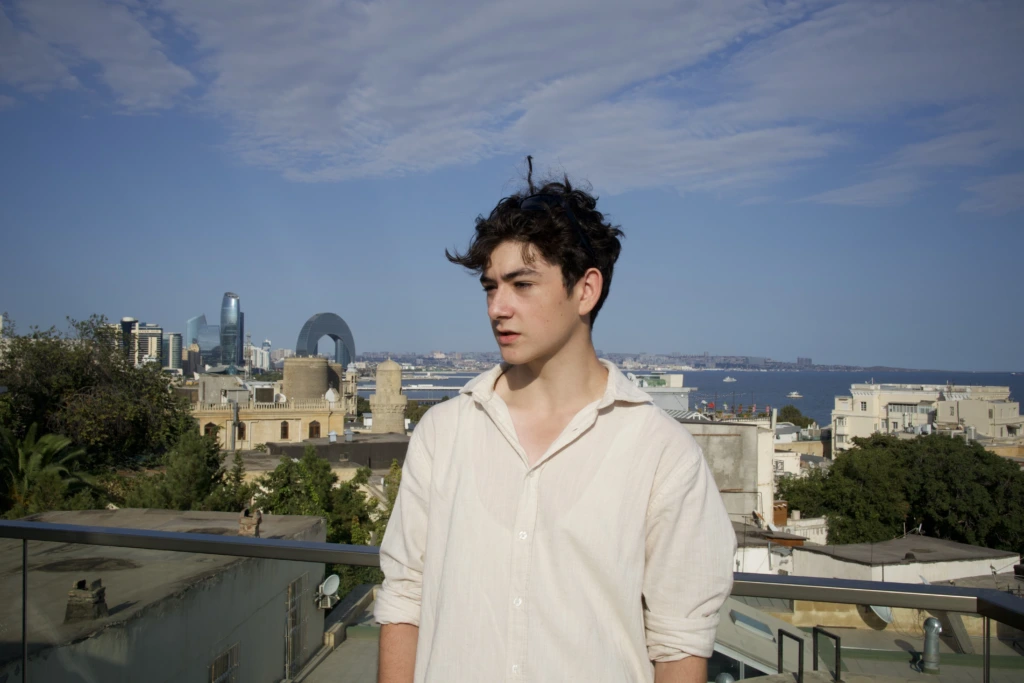
The idea itself reflects how Ali sees artificial intelligence not as a replacement for doctors or psychologists, but as a tool that may support decision-making and early detection. While the project was exploratory, it introduced him to one of the fastest-growing areas of AI – applications in healthcare and diagnostics.
Ali is realistic about what AI can and cannot do. “AI is not as intelligent as we think it is. It is very good at detecting patterns and solving complex problems more quickly than a human could. However, it still hasn’t reached the level of gaining consciousness,” he says, pointing out that AI does not think or feel like humans do. Still, he believes its power lies in speed and pattern recognition – areas where machines can outperform humans.
Looking forward, Ali expects AI to become increasingly useful in medicine. He believes it may assist in diagnosing diseases and detecting dangerous conditions earlier, especially through analysis of large data sets: “It can most definitely revolutionise the healthcare field, as it can assist in diagnosing the patients or detecting cancer cells, before the condition develops into something life-threatening”.
At the same time, he is aware that technology alone cannot solve human problems without professionals who understand how to use it responsibly.
Calling Kaunas a dollhouse town
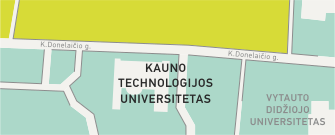
Ali chose Lithuania for both academic and practical reasons. He believes in the quality of education at KTU and found the cost of living in Kaunas manageable. Recommendations from friends already studying at the university confirmed his decision.
He still remembers his first day in Kaunas. “It was a sunny day, and I had so much fun exploring a new city and seeing new faces – it definitely left a lasting impression,” he says. Together with his friends, he soon started calling Kaunas a dollhouse town. “Its tidy streets and beautiful, colourful buildings feel like a miniature town,” Ali explains.
Moving from a busy capital to a quieter city required adjustment. But the contrast turned into an advantage. He now values the calmness of Kaunas, which helps him concentrate on his studies and personal projects.
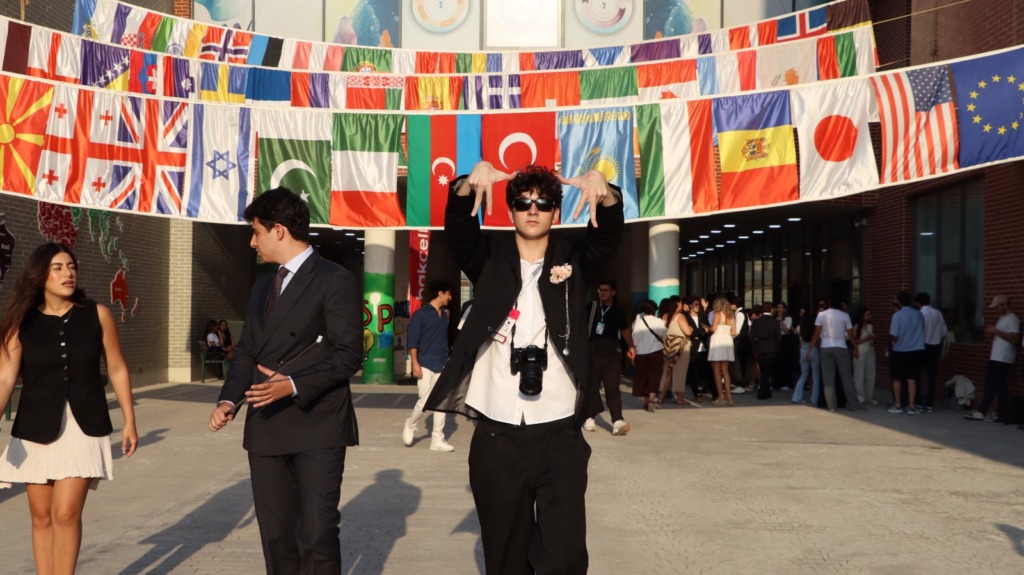
Outside the lecture halls, Ali found a second community through the GIFTed talent development programme, which he discovered via social media. It is designed for highly motivated students who aim to unlock their potential and continuously improve. Ali joined without hesitation, as back in Azerbaijan he was already active in youth organisations.
“The main reason international students don’t join this talent academy is a lack of confidence in themselves,” he believes. According to Ali, programmes like GIFTed can change how students see themselves. “Opportunities like this allow one to grow both personally and professionally, work in a team with like-minded individuals, and develop new skills,” he says. Ali’s experience shows how practical initiatives alongside studies can shape a more confident and responsible approach to complex challenges.