
Industrial transformation, accelerating digitisation, breakthroughs in artificial intelligence, and the rise of green technologies demand a bolder, forward-looking approach to how knowledge is created, tested, and applied. Today, value is not generated by isolated innovations, but by the capacity to connect science, technology, industry, and society into effective ecosystems that translate ideas into impact, accelerate progress, and support sustainable development. In this context, the University must move beyond its traditional boundaries in education and research and strengthen its role as a partner within innovation ecosystems – bringing stakeholders together, mobilising talent and expertise, and working towards shared progress.
The strategic direction Impact on Ecosystems commits the University to creating and transferring knowledge, strengthening its role as a trusted strategic partner and a leading expert voice, and laying the foundations for a smart, resilient, and globally competitive society
of the future.
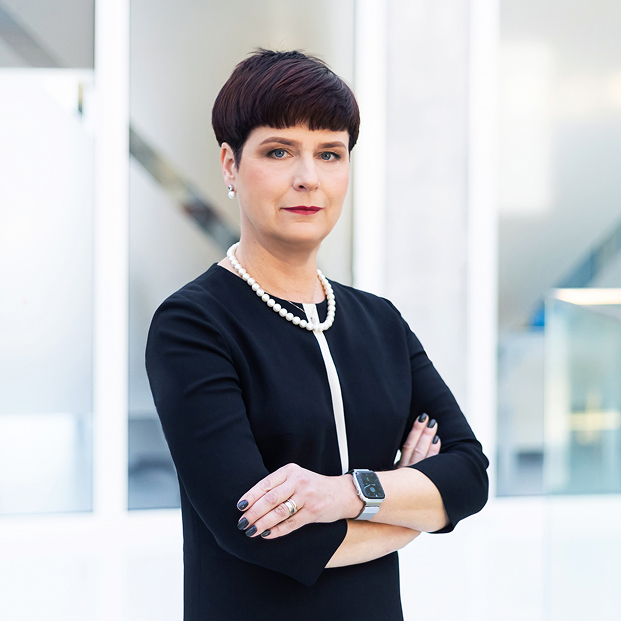
Prof. dr. Edita Gimžauskienė
Vice-Rector for Strategic Partnerships
By implementing the priorities of this strategic direction, KTU strengthens its role as a partner in knowledge exchange, technology transfer and expert insights, creating value for business, the public sector, regions and innovation ecosystems.
P1 |
Cross-Sector Partnerships in Innovation Ecosystems |
1.1. Launch and further develop the Open Innovation Centre.
1.2. Develop and implement a strategic partnership model.
1.3. Integrate start-ups and academic entrepreneurship into the open innovation ecosystem.
1.4. Cultivate a strong culture of philanthropy.
Objective
To serve as a strategic partner in knowledge exchange, technology transfer, and competency development across priority industries.
P2 |
Research / Evidence-Based Policymaking and Dissemination of Expertise |
2.1. Establish expert groups for technology monitoring and evidence-based policy shaping, and develop an operating model for their work.
2.2. Strengthen the University’s role in shaping public discourse on advanced technologies and innovations.
Objective
To position the University as a proactive leader of expert opinion, providing insights into future technological trends, and strengthening the role of science in evidence-based policymaking and public discourse.
P3 |
Bringing Together and Empowering Stakeholders in Regional Ecosystems |
3.1. Develop and implement an operating model for a cross-sector cooperation platform connecting local government, businesses, and educational communities.
3.2. Strengthen the University’s regional presence through KTU information centres with a particular focus on Vilnius and Panevėžys regions.
Objective
To act as a strategic partner in enhancing regional competitiveness through sustained cross-sector cooperation among local government, industry, and education communities.

Once the initiatives under this strategic direction are implemented, the University will act as a creator of tangible impact at both national and international levels. The Open Innovation Centre will evolve into a global platform that brings the business community together for partnership development and knowledge exchange.
The strategic partnership model, together with stronger engagement of start-ups and academic entrepreneurship, will support breakthroughs across the innovation ecosystem. Strengthening leadership in expert opinion will enhance the role of science in politically significant decision-making processes.
A regional cooperation platform, supported by targeted measures in Vilnius and Panevėžys regions, and the establishment of KTU information centres will further increase the University’s contribution to regional competitiveness. Together, these outcomes will enable the University to strengthen its impact across innovation, policy, and regional ecosystems more systematically, increasing their maturity, interaction, and the value they create for society.
Vice-Rector for Strategic Partnerships
Prof. Dr. Edita Gimžauskienė
K. Donelaičio St. 73, LT-44249 Kaunas
email edita.gimzauskiene@ktu.lt