Skip to content
Dark red background with a white open book and pencil icon, alongside the text “4 Quality Education.” Represents the goal of inclusive, equitable, and quality education for all.
Magenta background with a white icon of four arrows pointing outward from an equals sign, and the text “10 Reduced Inequalities.” Represents the goal of reducing inequality within and among countries.
Dark blue background with a white dove holding an olive branch above a gavel, and the text “16 Peace, Justice and Strong Institutions.” Represents promoting peaceful and inclusive societies, justice, and accountable institutions.

Student from Taiwan about her year at KTU: Learning Lithuanian and Seeing Snow for the First Time

Important | 2026-02-19

“Lithuanians are like a coconut – cold and hard outside, but very nice and sweet inside,” says Lihuei Liang from Taiwan. Coming from an island where coconuts grow naturally, she did not expect to use one to describe people in Northern Europe. Yet after a year at Kaunas University of Technology (KTU), the comparison felt accurate.

She came to Lithuania as an exchange student in Strategic Communication at KTU, initially planning to stay for one semester but eventually extending her studies to a full academic year. During that time, she explored not only her academic field but also everyday life in a country she had previously known little about.
Learning to Communicate Without Small Talk and Saying Ačiū Automatically

Before coming to Lithuania, Lihuei had no clear image of the country and few expectations. “I didn’t have many assumptions – I just thought it would feel like other European countries,” she admits.

The seasons were among the first things that felt different. In Taiwan, snow does not fall and spring and autumn pass quickly, while in Lithuania winter meant real snow and darker mornings. “Learning to check the weather before leaving home and deciding whether the day required boots became part of my routine,” she says.

Summer felt entirely different: long evenings, outdoor events, music and ice cream created a atmosphere she had not known before. “I didn’t know that weather would affect humans that much,” she reflects.

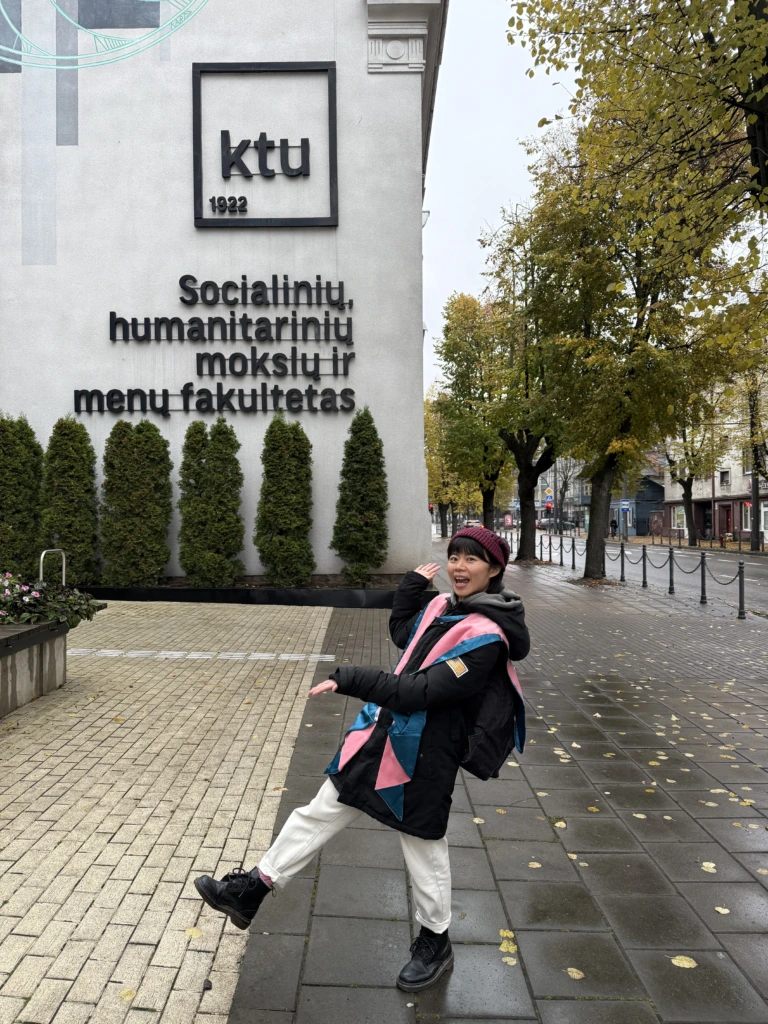
Lihuei Liang
Lihuei Liang

Living in Kaunas also meant becoming more visible, as the city has relatively few Asian residents. She sometimes noticed children or older people looking at her in public. It felt unfamiliar at first, but never hostile.

“I had experiences where kids or teenagers came up to compliment me, saying I’m beautiful. People here were respectful and friendly to me,” she says.

KTU student Lihuei
KTU student Lihuei

Everyday interactions felt different from what Lihuei was used to. “I was ready for small talk,” she says, but instead noticed that some people even avoided eye contact.

Once she got to know people better, they turned out to be open, helpful and kind. The distance she felt at the beginning was simply another way of communicating.

The longer Lihuei stayed, the more natural Lithuania felt. Even small habits began to shift, as Lithuanian words like ačiū, atsiprašau, iki and viso slipped into her everyday speech without conscious effort.

“I almost said ačiū to a flight attendant on the way back to Taiwan, and that was on Turkish Airlines,” she laughs.

Asking Lithuanians About Freedom

“Growing up, I have never had a clear long-term goal or dream job that motivated me to pursue a particular field. I did not know where to go while my peers were on their paths, which, of course, scared me,” says Lihuei.

Yet the humanities had been part of her life for years at school: she edited magazines, yearbooks and newsletters. “It was just too close for me to realise it could be my career,” she says, adding that writing itself was never the main attraction. “I’m more interested in understanding things and giving them meaning,” concludes Lihuei.

She decided to study cultural and creative industries and later pursued a master’s degree in social innovation in Taiwan. Studying abroad grew out of curiosity and Europe had been on her list for a long time. “I didn’t want its history, art and music to stay in textbooks – I wanted to experience them myself,” she says.

For Lihuei, learning has never been about certainty. “The more I learn, the less I know,” she reflects. Rather than discouraging her, such a realisation deepened her curiosity.

Lihuei in Kaunas
Lihuei in Kaunas

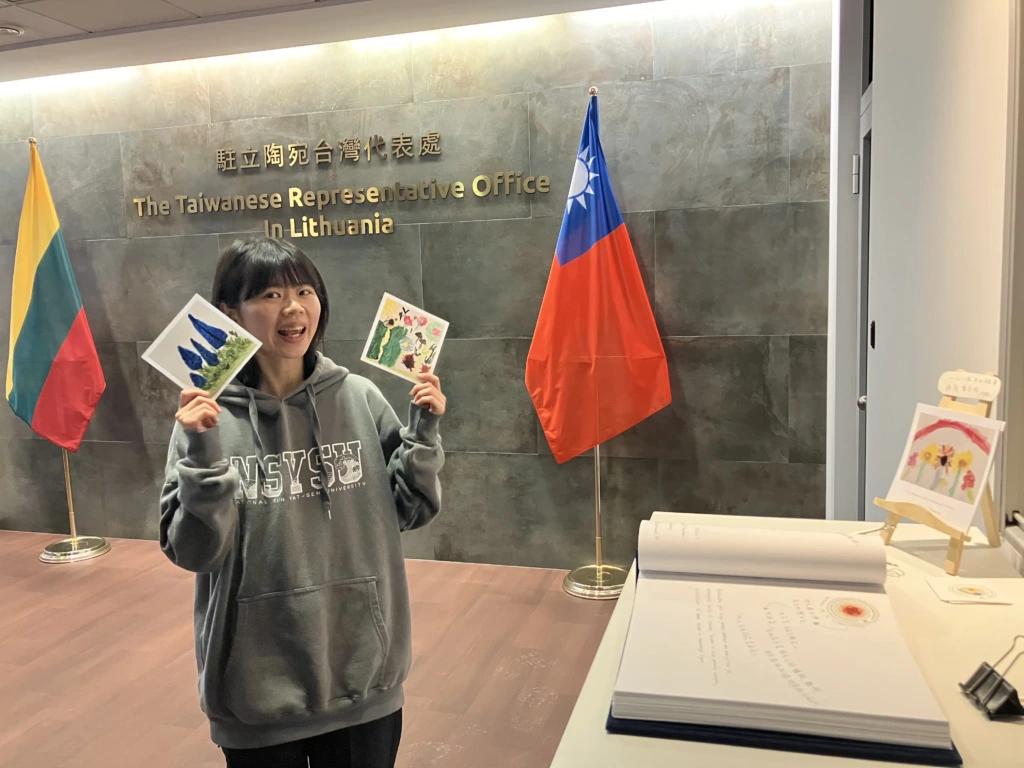
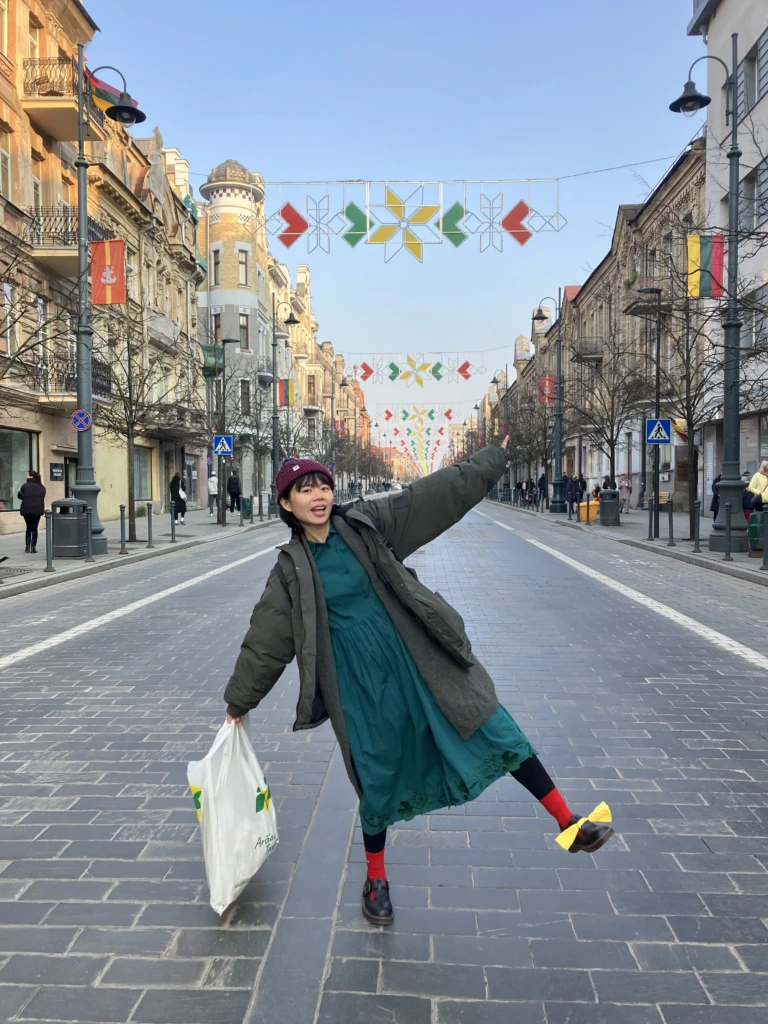
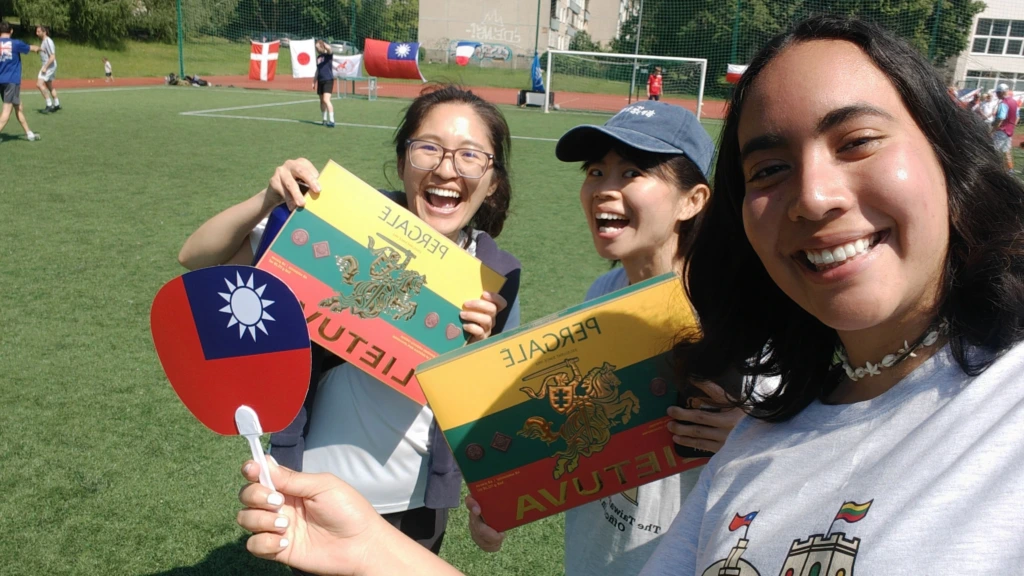
That mindset eventually took a more concrete form in Lithuania. It led her to create “We Bloom in the Garden of Freedom”, a project connecting Lithuania and Taiwan through dialogue and art, using flowers as a symbol of freedom and growth. One of its most meaningful moments took place on March 11, Lithuania’s Independence Day, when she stood in the street holding both Lithuanian and Taiwanese flags, inviting people to reflect on freedom and democracy.

“Even if we didn’t speak each other’s language, they still gave me a thumbs up, smiled, or simply greeted me,” says the KTU exchange student.

Interested in studying abroad? Learn more about Erasmus exchange opportunities at KTU.