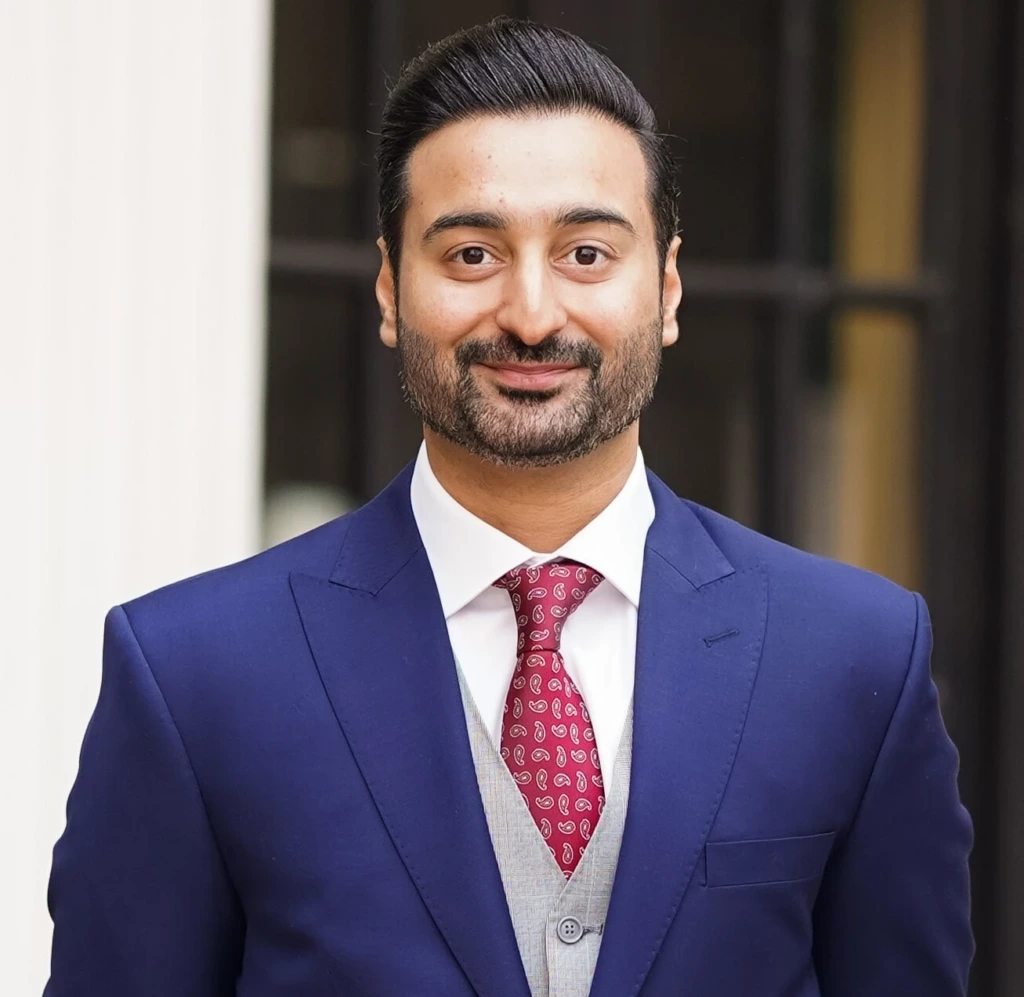
An international researcher at KTU Faculty of Informatics, Dr Sarmad Maqsood, has been awarded a Lithuanian Academy of Sciences prize for his work on deep learning methods for medical image analysis.
Dr Maqsood’s work addresses challenges in medical diagnostics.
Winning the Academy’s competition was a significant achievement for the researcher, confirming the value of his chosen direction. “This recognition motivates me to continue creating, researching and discovering reliable artificial intelligence (AI) methods that can work in real-world medical settings,” says Dr Maqsood. “This activity encourages closer cooperation between doctors and scientists, and interdisciplinary teams are being formed.”
The challenge – imperfect data in the real world
Dr Maqsood’s research focuses on the development of deep learning methods for medical image analysis. Although AI promises enormous opportunities in medicine, in practice, there is a serious challenge – data is rarely “clean”.
The scientist said that the biggest challenge of the research was to develop methods that would remain accurate and reliable even when the data is imperfect: annotations are inaccurate or incomplete, different experts evaluate the same images differently, and data sets are small and heterogeneous.
“Medical data is rarely ideal in reality, so the most important thing was to develop models that could learn reliably in the face of uncertainty,” explains the scientist. An equally important part of the study was the strict validity of the methods – carefully planned experiments and cautious evaluation of results to ensure the reliability of the conclusions.
Advice for future researchers: ethics and patience
When asked what advice he would give to young colleagues starting on their research careers, KTU’s researcher emphasises the process and values rather than success. In his opinion, science is not a sprint; this field requires thoroughness and attention to detail.
“Choose an important problem but define a clear and achievable research question. Document everything so that the research can be replicated, and don’t be afraid to ask for feedback early on – good mentoring speeds up progress,” says the laureate of one of the important awards in Lithuanian science.
He also urges researchers not to be discouraged when faced with obstacles: “View negative results or article rejections as part of the process. Work ethically and transparently – quality and integrity pay off in the long run.”
This award is part of the annual Lithuanian Academy of Science competition, which aims to encourage early-career researchers to conduct research at the highest level. Sarmad Maqsood’s success proves once again that the KTU Faculty of Informatics remains a global hub for AI innovation.