Skip to content

Imitating nature, the superpowers of Lichens, and AI that can feel shame: KTU researchers publish a book on non-dominant design

Important | 2025-12-17

Kaunas University of Technology (KTU), together with partners, has released a new book exploring a form of design that learns from nature while daring to abandon long-standing ideas of human dominance. The authors insist: this is not another publication about sustainability. Instead, it is an attempt to fundamentally rethink the role of design in culture, technology, and our relationships with other living systems.

“BIO-DE-CODE. Decoding Nature for Coexistence – Design Patterns for Non-Dominant, Biological Morphogenesis” brings together the insights of philosophers, artists, critics, design practitioners, and students. The book poses a central question: how do we imagine a world in which humans are not the main protagonists, but one species among many – capable of learning, collaborating, and adapting? The editors argue that design, once freed from its traditional professional boundaries, can become a tool for navigating a rapidly changing world.

Challenges to move beyond ordinary patterns of thinking

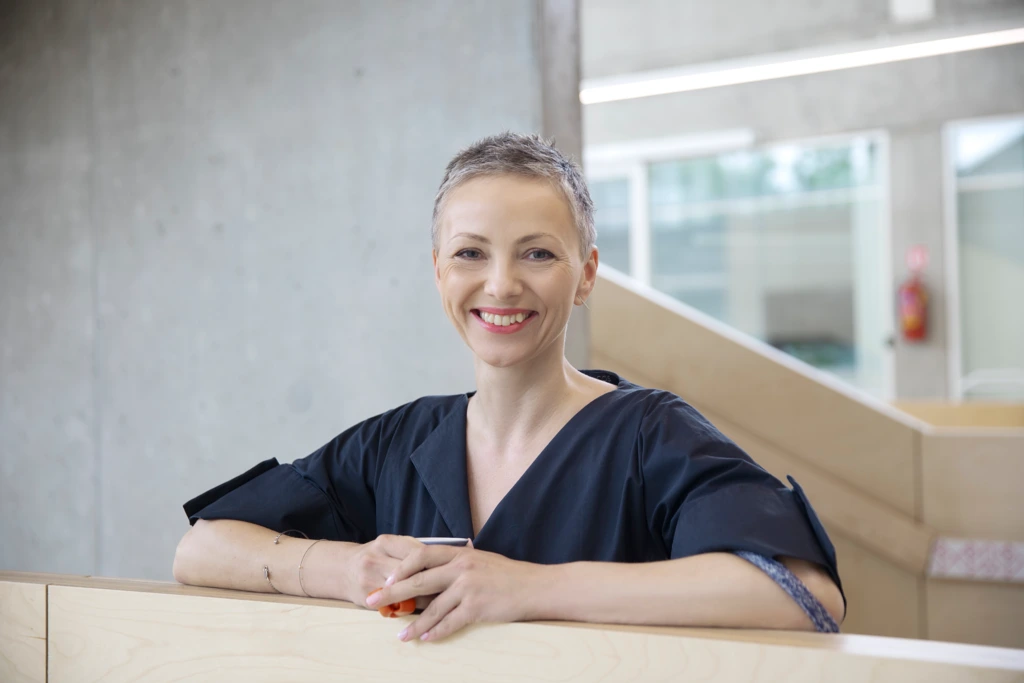
In the book, Prof. Dr Rūta Valušytė, head of KTU’s Design Centre at the Faculty of Mechanical Engineering and Design (FMED), asks whether design can act as a civic practice and help address cultural tensions. She warns that the blind pursuit of efficiency and endless optimisation – without nurturing imagination – turns people into system operators rather than flexible participants in complex ecosystems. Valušytė urges readers to reclaim curiosity and the courage to break norms, not only to create but also to rebuild social connections.

Dr Ruta Valusyte, KTU
Prof. Dr Rūta Valušytė, head of KTU’s Design Centre at the Faculty of Mechanical Engineering and Design

Any discussion about nature today inevitably intersects with technology, and BIO-DE-CODE explores this overlap through provocative and imaginative perspectives. Art and technoscience critic Marco Mancuso expands the notion of intelligence, reminding readers that humans are not the only beings capable of processing information – plants, fungi, and bacteria do it too. As he writes, “Neuroscience acknowledges that what we call intelligence is not necessarily a conscious process.”

This idea is further explored by digital artist and architect Aistė Ambrazevičiūtė, who contributes a poetic, biologically attuned worldview. In her work, lichens possess “superpowers,” while viruses appear as strange, unpredictable guests that fuel their irrational consciousness and enable them to spread.

Looking toward design’s technological future, Prof. Habil. Dr Gintautas Mažeikis takes readers into the realm of AI iconology, art history metaphors, and early notions of robot psychology. He provocatively asks: Can AI, avatars, and AI-driven robots feel shame? Mažeikis writes not to warn society about machines, but to reveal the symbols and projections humans embed in non-human systems.

According to the editors, these ideas challenge us to rethink familiar ecological narratives: if intelligence is not a privilege, how should we treat other species? And can we move beyond binary thinking – “human vs. non-human” – toward truly ethical coexistence?

Aiming to expand the role of design

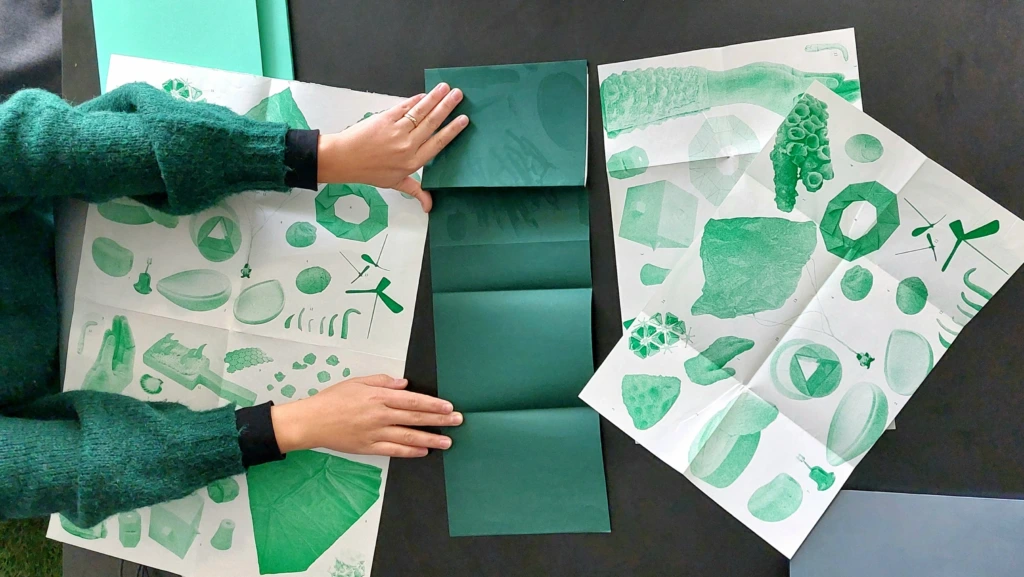
Human-driven perfectionism and the reshaping of natural processes are explored not only in the book’s content but also in its design. Book designer Inga Navickaitė-Drąsutė created a custom typeface using wooden sticks collected in the Curonian Spit. Furthermore, the publication is printed using risography – a delicate, mechanical process that requires significant manual work. These choices underscore a philosophy of imperfection, leaving room for mistakes and inviting readers to trust processes that cannot be fully controlled.

Ambiguity is also embraced in student projects from FMED’s “Bionics and Biomimicry” study module, included in the book. The editors highlight not the finished results but the students’ thinking, hypotheses, and material experiments. The projects range from octopus-inspired tentacles adapted to human skin to an origami-shaped skirt designed to keep its wearer safe during floods.


Dr Dario Martinelli
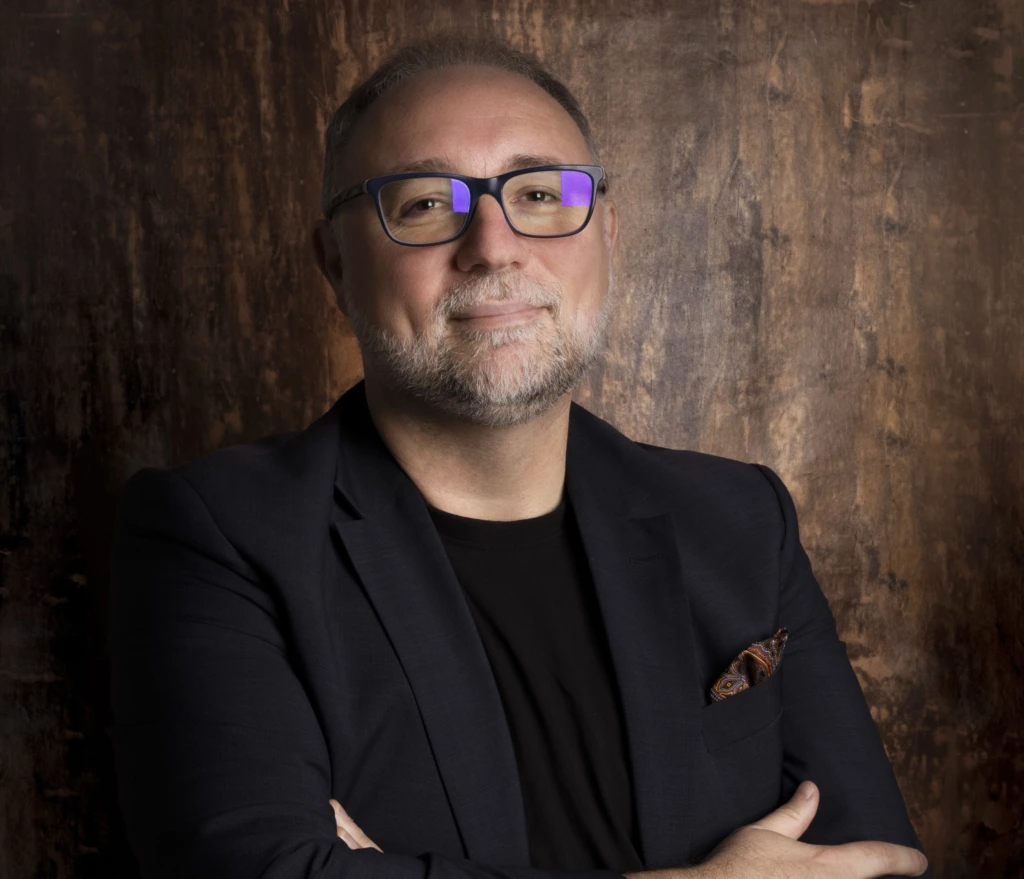
Prof. Dr. Dario Martinelli of KTU’s Faculty of Social Sciences, Arts and Humanities

Why does society react so passionately to vegans? Prof. Dr. Dario Martinelli of KTU’s Faculty of Social Sciences, Arts and Humanities examines this paradox by analyzing dietary labels as ideological markers. “Humans are not carnivores – never have been – just as they are not pure herbivores,” he argues, suggesting that eating habits are cultural constructs through which we continually redefine our relationship with animals.

Design researcher Ilpo Koskinen also questions the contemporary fascination with bio-design, warning of what he calls “bio-washing”: conventional design disguised with superficial biological references. His text helps readers distinguish when biology genuinely informs design logic – and when it is merely decorative.

According to the creators, the goal of BIO-DE-CODE is to expand the role of design beyond its professional boundaries – into culture, education, and conflict-driven environments. The book – published in both Lithuanian and English – will be available in early 2026. Editors: Lorenzo Piazzi, Rūta Valušytė, Kotryna Lenkauskaitė. Publisher: VšĮ “Dizaino draugai” (Design Friends). The publication was funded by the Lithuanian Council for Culture.